
Should you give the client what they want?
Are you a logo designer that takes pride in your work, but yet struggles to find where they stand when working with clients?
This is a common problem that designers have and sometimes leaves them contemplating to stop designing.
Discover and learn how to work with clients as a problem solver, as well as whether or not you should give the client what they request.
The Chase Bank Story
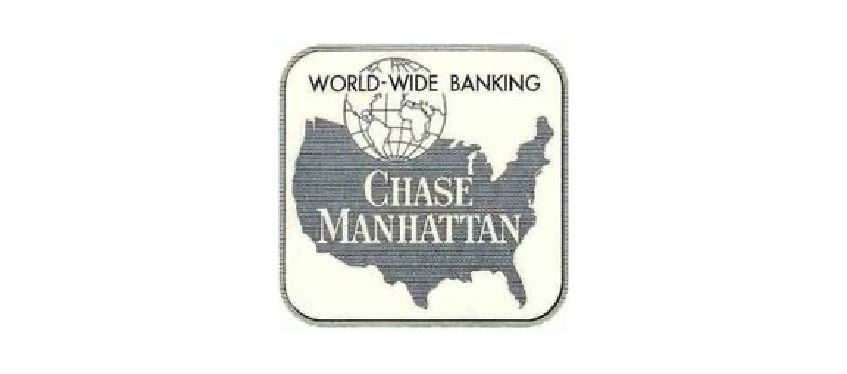
The old World Wide Banking Chase Manhattan Logo Design
In 1960, the Chase national bank in Manhattan merged to create the second largest bank in USA - Chase Manhattan Bank.
During the merge, there was a need to re-brand and re-design the current logo. The previous logo design was very heavy on the eye and they believed it would no longer work.
Ivan Chermayeff and Tom Geismar were hired to work on the logo design. They shortly discovered there isn’t a single representation of banking or finance. Taking risks as creatives, they believed that overtime, an abstract logo mark can take on the meaning of the bank.
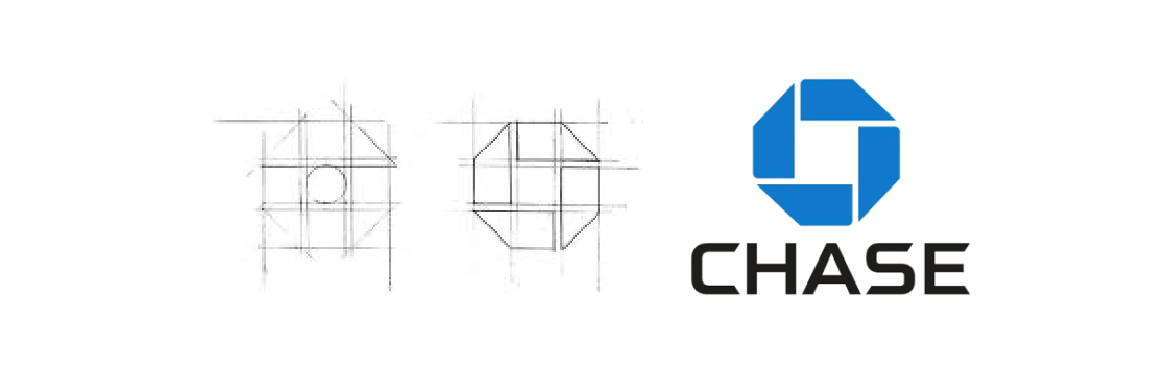
The Chase Logo Design by Ivan Chermayeff and Tom Geismar
Ultimately, they went for an abstract octagon that had no connection to finance.
When shown to the CEO’s, a typical suggestion was made; “Why doesn’t the logo design include our banks building?”. After discussion, the 3 main stakeholders at Chase finally agreed to go with it, but one (the chairman) was still not satisfied.
After the bank had adopted the logo, six months later, the same chairman was wearing a tie and cufflinks with the logo design he previously refuted. But very quickly he felt a sense of ownership and understood the problem had been solved…
The designer is the problem solver… not the client

Regardless on what you are creating, always remember that you are a problem solver.
Approach the project like a problem needing a solution. Project briefs can be restrictive at times… but good designers are meant to break rules.
Sometimes, briefs typically tend to assume the answer to the solution already. This can put your mind and creativity in a box and not allow you to discover the correct solution.
Occasionally, clients may also include within a brief, compulsory elements they believe their logo design needs. It is likely that the clients solution to the problem could be wrong, and if you fail to identify this, the longterm success for the project/ logo design could be at jeopardy.
Designers are paid to keep it simple
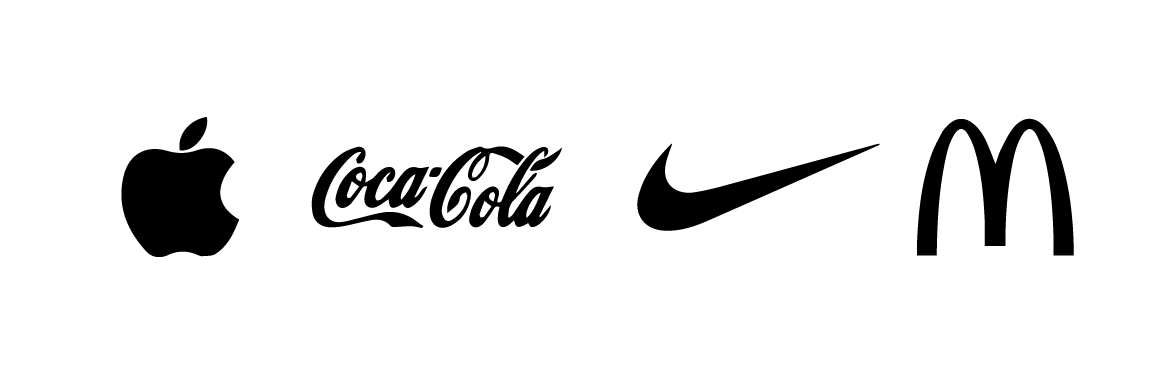
Apple, CocaCola, Nike and McDonalds Logo design
Being an expert logo designer takes hours, long nights, days and years of hard work. Keeping a logo design simple is extremely difficult and this needs to be rembered. This is actually a key component in What makes a good logo design (read more…)
Clients typically assume ‘more is more’ rather than ‘less is more’.
Nike, Apple, Mc Donalds and Chase are all very successful businesses with simple yet unique logo designs, all created from disciplined designers who have mastered simplicity.
Giving a client what they want is similar to spoiling a partner.
Although you have their best interest at heart, trying to always make them happy can be bad in the long run. Typically, clients may assume that logo designs need to be literal and tell a whole story. This is far from the truth. The chase bank logo does none of that, instead it is completely abstract and rather, octagon shapes are now commonly associated with Chase. Discover more about the craft of simplicity in The best logo design books (read more…)
It is not unusual for a client to return to a designer requesting for a new logo design, after the designer had ‘spoiled’ the client. The client later realises that it needs to be simple.
It is important to remember why the client is hiring you. It is also your job to translate what the client wants to what they actually need.
Translate and Produce
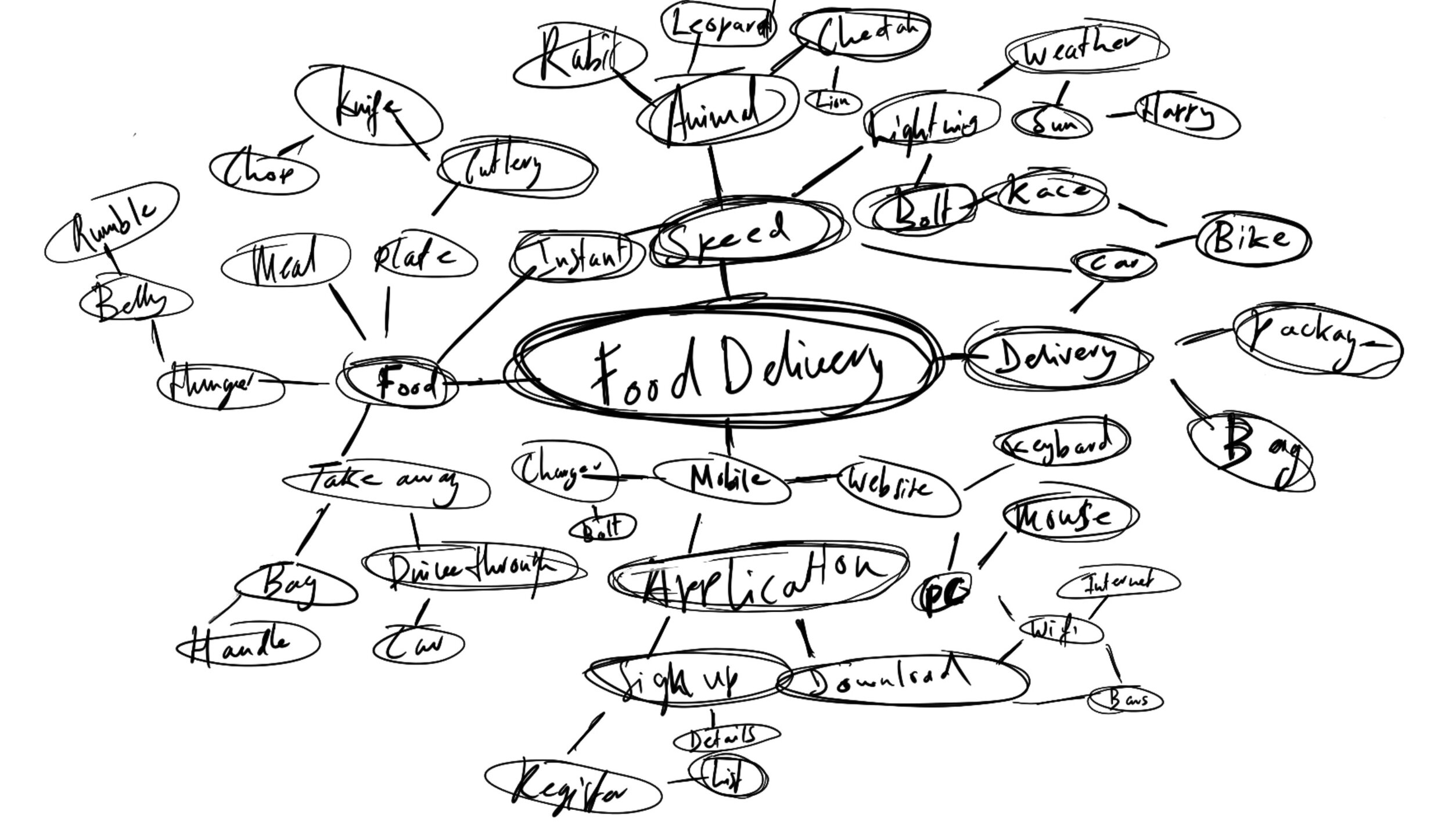
Brainstorming - logo design process taken from ‘How to design a logo’
As you are a problem solver, it’s your job to understand what the client is after, and convert it to a feasible solution.
There are many ways in doing this, but someone who cares about logo design and their client will take the time to share the reasoning behind the choices they have made as a designer.
Clients aren’t aware to what makes a logo design successful. For example, when a CEO at Chase recommended using their building as part of their logo, he wasn’t aware that simplicity such as a geometric shapes would be more effective.
Clients often look for meaning and a connection within their logo design. Being a problem solver also means being a story teller.
An effective way to find meaning when creating a logo design, is brainstorming. Understand How to create a logo design effectively (read more…)
Build meaning with what you are creating. Share with them the compelling story behind their new logo design.
‘The Golden 3’

Working with a client requires compassion, patients and honesty. The client places a lot of trust in you as a designer, so it is your job to solve their problem.
To understand the client, translate what they want, to what they actually need, in order to have an effective project outcome. Here is 3 golden questions to ask them:
What do you mean by that?
Never assume what the client means. Allow the client to elaborate on what they have include in their brief, or in a meeting.
Why do you say that?
Understand the theory the client holds. This will clarify for you as the designer, how they have come to that solution.
Have you ever considered?
This is where your expertise come in to play. The client may be wrong in their solution, so it’s your turn to offer an alternative to solve the problem.
To conclude, a good designer wouldn’t ALWAYS give the client what. They are coming to you for your expertise and this requires honesty and compassion as a designer.
This doesn’t mean that you should go off and do your own thing, but you should always do what is not expected of you. This element of surprise may pay off and give an alternative approach to the problem that the client hadn’t thought of prior.
Similar to the Chase bank logo design story, clients aren’t experts in simplicity but rather depend on you for the skill and creativity. The client is paying you for only the time you spent on the project, but also the years and long nights learning the craft of logo design.
‘The Golden 3’ puts you at an advantage when tackling a design problem. You are able to make a judgement if you should break the rules within a brief or not. These questions can with out a doubt take your design process to another level. It can also have a long term impact on the clients business. Discover How a logo design can impact sales within a business.
Always remind a client ultimately, a logo design gains meaning and power overtime.