
The Presentation Pitch Pyramid: How to Present Logos That Get a “Yes!”
After nearly a decade of designing logos and identities—working with startups, global brands, and elite agencies—I’ve learned something crucial:
You don’t just need a great logo.
You need to present it in a way that gets a yes.
In my last blog, What I Learned from 18 Behance Awards, I broke down the power of perception and presentation.
Now, we go deeper.
Because presentation isn’t just mockups and Keynote decks—
It’s how you sell belief, transfer vision, and guide your client to the right choice.
After countless presentations—wins, losses, and lessons—I’ve analyzed what worked.
I turned it into a framework I call:
The Presentation Pitch Pyramid
The Presentation Pitch Pyramid Framework - More below
Key Takeaways
Great logos still need great storytelling to succeed
Clients don’t just buy visuals—they buy belief
The better you present, the fewer revisions you’ll face
The Presentation Pitch Pyramid helps you pitch with clarity, emotion, and confidence
Lean Logo Designers don’t just create—they communicate effectively
The Problem: When Good Logos Don’t Land
Early in my career, I made this mistake often.
I’d design something solid, minimal, beautifully crafted—but present it like an afterthought.
The client didn’t see what I saw.
They felt unsure—or worse, they’d choose the weaker concept.
And I’d walk away frustrated, thinking,
“Why didn’t they get it?”
Over time, I learned the hard truth:
If a client doesn’t say yes to the right solution,
it’s likely you didn’t present it effectively.
Even if the logo is great—without belief, there’s no buy-in.
A Real Example: Selling a Vision, Not Just Visuals
Back when I was working as an in-house designer for a VC company, we needed an identity for a new brand.
I already had the answer.
In fact, I had designed the perfect logo a year earlier—for a totally unrelated concept.
I didn’t waste time redrawing it.
I simply adapted the typography and spent 95% of my project time crafting the presentation.
I crafted a story
I built visuals that felt cinematic
I rehearsed my delivery
I didn’t just show a logo—I showed a vision
And I confidently told them this was a concept I created a year ago
The response?
Amazed.
Immediate yes.
No revisions.
No second guessing.
That moment solidified how I viewed selling logos through presentations forever.
The Presentation Pitch Pyramid
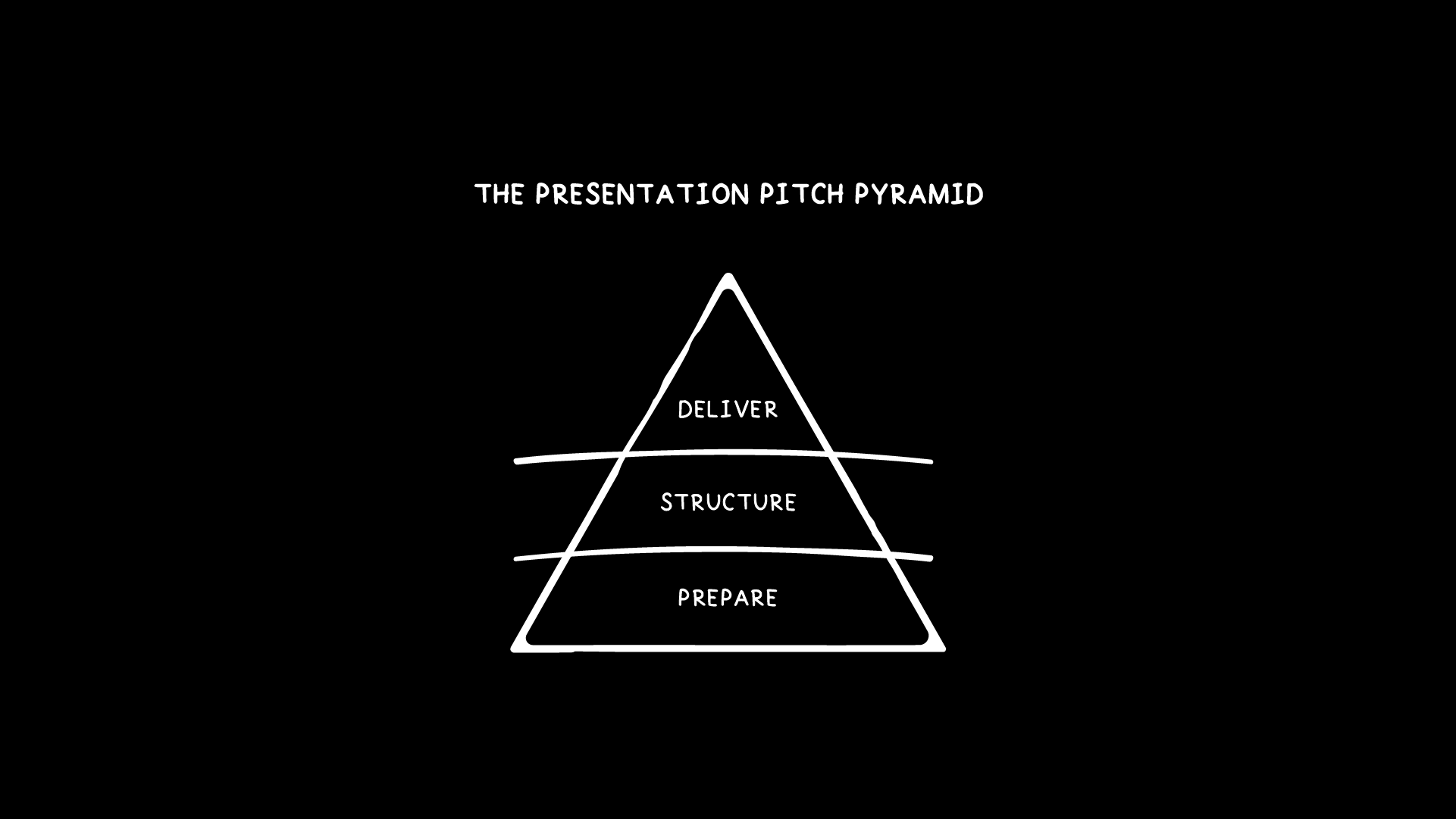
The Presentation Pitch Pyramid
This system is built on one key insight:
A great logo isn’t enough—you need to sell the idea behind it.
The formula is broken into three layers:
1. PREPARE — Build Your Foundation
Practice until it sounds natural
Curate strong visuals and mockups
Get into the right mindset before the pitch
Understand your audience and their emotional goals
When you’re prepared, your confidence isn’t fake—it’s earned.
2. STRUCTURE — Tell the Right Story
Follow a clear flow: problem → solution → outcome
Link your idea to their business challenge
Save your strongest visuals and concept for last—finish with impact
Keep the story about them, not you
Great presentations build anticipation—and deliver clarity.
3. DELIVER — Transfer Belief
Speak with confidence and empathy
Use emotion and drama to elevate your pitch
Recall past conversations to rebuild rapport
Present not to impress—but to connect
You’re not just showing a logo.
You’re guiding someone toward a vision that you see with your expertise.
When It Works, It Changes Everything.
I’ve felt pressure in presentations.
But when I truly prepared, structured, and delivered—the outcome changed.
Clients said yes faster, revisions dropped and confidence grew.
Because the value wasn’t just in the design, it was in the delivery of the vision.
When you deliver a logo presentation with intention and clarity, your audience doesn’t just see a design—they feel its value. That perception alone can elevate the entire project.
This is why it’s worth investing your time, money, and energy (TME) into the presentation phase—because how you present is just as powerful as what you’ve created.
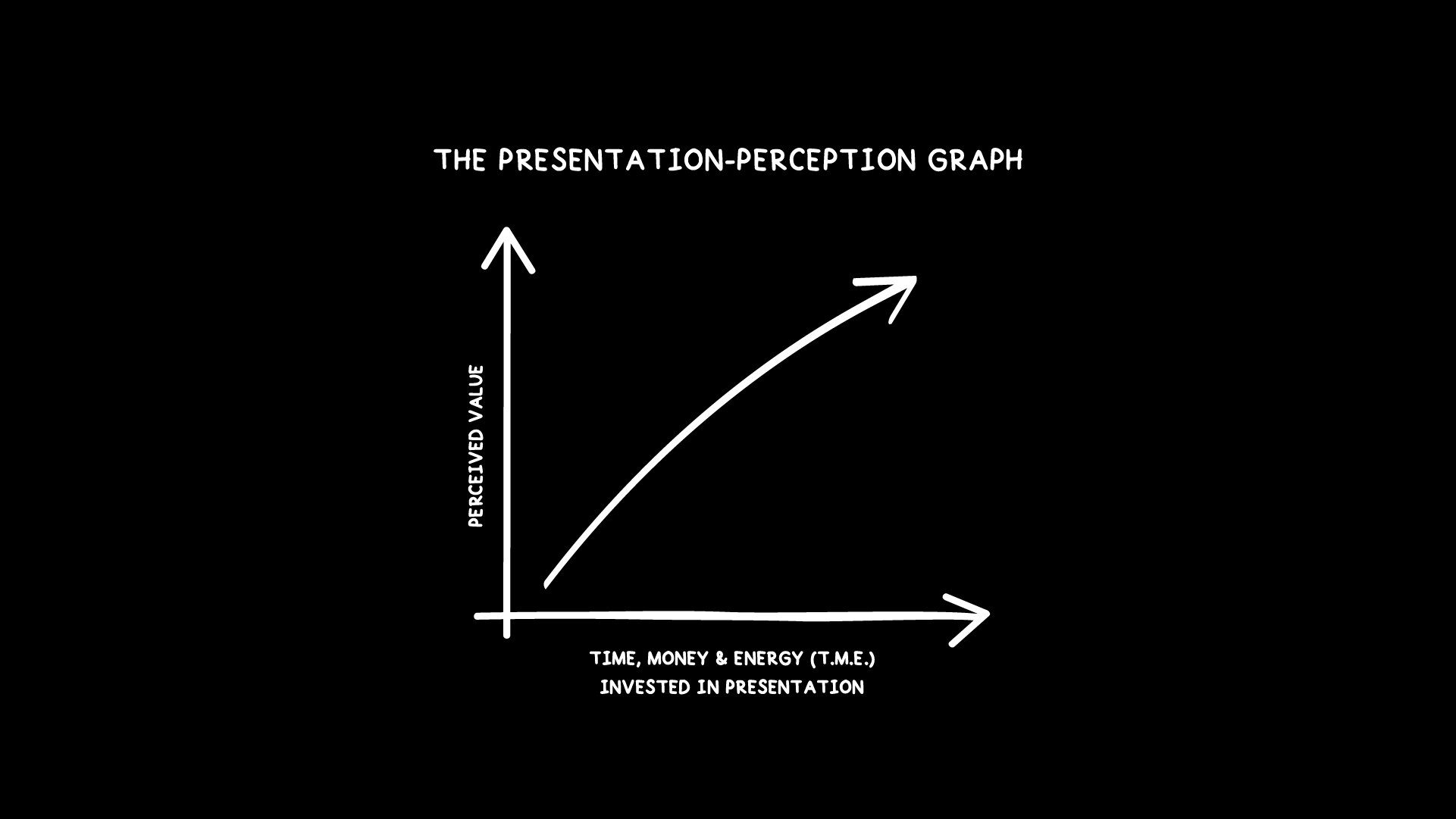
The Presentation Perception Graph
How to Use This Framework in Your Portfolio
The Presentation Pitch Pyramid isn’t just for client meetings—it shaped how I built my portfolio and Behance case studies too. In fact, applying this formula visually and strategically is what helped me earn 18 Behance design awards.
Read my article here about how you can win Behance awards.
Here’s how I translated the formula into my presentation work:
Prepare
I carefully selected high-quality, realistic mockups—ones that felt different from the typical templates. They weren’t just placeholders. Each mockup aligned with the identity system and echoed the visual DNA of the logo itself.
→ See this project, where I chose mockups that mirrored the logo’s geometry and tone.
Structure
I reverse-engineered the best Behance case studies—the ones consistently awarded—and studied how they told a visual story. I mapped out their sections, adapted their flow, and then tailored it to my project. Structure wasn’t guesswork—it was strategy.
→ See this project, my most viewed logo & identity casestudy.
Deliver
I opened each case study with clear, compelling context—setting the scene with a strong introduction. I explained the brief, the challenge, and the brand’s goal.
This simple addition immediately created emotional engagement and gave the audience a reason to care before they even saw the work.
→ See this project - Provides in-depth context right at the start of the project.
Even outside of live pitches, the formula works.
Because great presentation isn’t about being in the room—it’s about creating an experience, wherever the work is seen.
Conclusion
A great logo can be ignored.
A great presentation makes it unforgettable.
The moment you step into that client call, you’re not just showing a design—you’re transferring belief. You’re guiding someone through your thinking, aligning their vision with yours, and making the invisible feel inevitable.
That’s what the Presentation Pitch Pyramid is about:
Presenting with purpose. Pitching with confidence. Landing the yes before the logo even appears.
Because in the end, the work doesn’t speak for itself—you do.
What’s the hardest part about presenting your logo concepts?
Perfect your logo lockups with Logo Grids Script Pack™ for Adobe Illustrator